Writing approach
Gradual Release Model
To ensure all pupils develop secure foundational knowledge in English and become confident, independent readers, writers and communicators, our curriculum is built around high-quality teaching, explicit modelling and the Gradual Release Model. Teachers introduce ambitious texts, rich vocabulary, language structures and genre conventions, using the I do, we do, you do approach to move pupils from teacher modelling and guided practice towards independent application. Carefully sequenced lessons enable pupils to build, revisit and secure knowledge before applying their learning in independent reading and writing outcomes.
This approach promotes equity of access to the English curriculum, ensuring that all pupils, including those with SEND and those eligible for Pupil Premium, can access ambitious content and achieve high-quality outcomes. Teachers use assessment to identify gaps in knowledge and adapt teaching through targeted scaffolding, explicit vocabulary instruction, additional modelling and opportunities for supported practice. These strategies are gradually reduced as pupils develop confidence, fluency and independence, ensuring that support enables pupils to access the same ambitious curriculum rather than limiting their learning.
For pupils requiring additional support, including those with SEND and disadvantaged pupils, trained staff work closely with class teachers to deliver targeted teaching that reinforces key English knowledge and skills. This follows the Gradual Release Model and is informed by current assessment information, ensuring continuity with classroom learning and enabling pupils to address specific gaps in reading, writing, spelling and language development. Through regular assessment and responsive teaching, we aim to ensure that every pupil makes progress from their individual starting point and develops the knowledge, skills and confidence needed to become an effective, independent learner.
Our Unit Structure:
Unit Structure
|
Text Immersion |
Teachers introduce the text focus for the next outcome. This lesson usually involved ‘extracting the plot’ of the text. Discussion are had around the themes of the texts, the conventions of the genre, the characters and plot. Children discuss the genre, purpose and audience of their outcome. |
|
SPaG Lesson 1 |
Children are taught the first of their three focus SPaG features following the ‘I do, We do, You do’ approach. |
|
SPaG Lesson 2 |
Children are taught the second of their three focus SPaG features following the ‘I do, We do, You do’ approach.
|
|
SPaG Lesson 3 |
Children are taught the third of their three focus SPaG features following the ‘I do, We do, You do’ approach.
|
|
Outcome 1 Plan |
Lead by the teacher the children plan the outcome 1 model text. They plan the main body of the text as well as grammar and vocabulary choices they will use.
|
|
Outcome 1 Writing |
The teacher models the text on flipchart paper. The teacher ‘thinks aloud’ about their choices and demarcates the taught grammar features. Children follow along adapting the outcome 1 in their books. Dialogue between the pupils and teachers allows for discussing of vocabulary, sentence structure and grammar choices to ensure collaboration between the class and teacher.
|
|
Feed It Forward |
During this session the class receives whole class feedback on the spelling, punctuation, and grammar errors they may have made in outcome 1. The teacher shares examples and non-examples and the children are given the chance to revise and edit their outcome 1.
|
|
Outcome 2 Plan |
Children plan their outcome 2 – their independent outcome.
|
|
Outcome 2 Writing |
Children write their outcome 2 independently.
|
|
Editing/ Revising/ Publishing |
Children are given the chance to adt on feedback from their teacher. They reflect on their work, setting themselves targets on the knowledge organisers for future pieces. Each term, one piece of writing is published. This gives the children the opportunity to publish one poem, one narrative piece and one non-fiction piece of writing per year.
|
Writing overviews
Writing is taught through carefully selected, high-quality texts that expose pupils to both classic and contemporary literature, including works by ethnically diverse authors. Where appropriate, links are made between English teaching texts and the school’s Author of the Term or Half Term, strengthening pupils’ knowledge of authors and their works while broadening their literary experiences and providing rich models for their own writing. Each year, pupil and staff voice is conducted to ensure the chosen texts and enjoyable, relevant and aid in retention of the skills they are taught.
Please see below for our writing overviews for each year group.
7 Plots
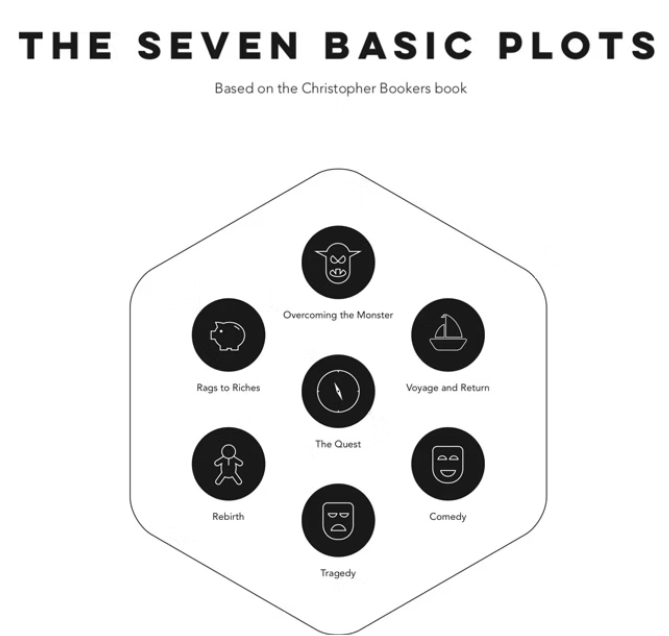
Narrative writing is carefully sequenced across the curriculum around the seven basic plots, ensuring pupils have opportunities to explore and apply the conventions of each plot as they progress through school. By Year 5, pupils draw on their accumulated knowledge and experience to independently select one of the seven plots for their own narrative, demonstrating increasing confidence, creativity and control as writers.
500 words
In Year 5, pupils have the opportunity to participate in the BBC 500 Words story-writing competition, applying their knowledge of narrative structure and the seven basic plots to create their own original stories. Pupils select one of the seven plots to inspire their writing, drawing on the vocabulary, language choices and storytelling techniques developed throughout the English curriculum. This provides an authentic purpose for writing, encouraging creativity, imagination and independence while enabling pupils to showcase their developing skills as confident young authors.
Spelling
In Key Stage 2, spelling is taught explicitly through three dedicated lessons each week, supported by the Spelling Shed programme. Spelling Shed provides a structured approach to teaching spelling patterns, rules and statutory word lists, helping pupils develop accuracy and confidence in their written work. Children also access the online Spelling Shed platform at home to practise and consolidate their learning. In addition, teachers identify spelling errors through ongoing assessment and feedback, providing pupils with personalised spellings to practise to address gaps in knowledge and improve the accuracy of their independent writing.
Handwriting
Handwriting is taught daily using the Penpals scheme, which provides a structured, progressive approach to developing pupils’ handwriting skills as they move through the school. Letter formation examples are displayed in all classrooms to provide a consistent visual reference. In EYFS and Key Stage 1, pupils use tramline books across all subjects to support accurate letter formation, size and positioning. Pupils who do not meet the expected standard in the Year 2 handwriting check continue to use tramline books in Year 3 across all subjects to consolidate these foundational skills. In Years 4, 5 and 6, pupils who experience difficulties with handwriting may receive additional support through tramline books or targeted handwriting interventions, ensuring they develop the fluency, legibility and confidence needed to record their learning effectively.
Access the Spelling Shed: