History
Subject Lead: Mrs. V. Parry
Intent, Implementation, Impact
Intent
At Haslam Park Primary School, we deliver an inclusive, enquiry-based history curriculum that reflects our pupils’ interests and local context. The curriculum is designed to build pupils’ historical knowledge, cultural capital and understanding of the world, while developing their ability to think critically and ask meaningful questions about the past. Our curriculum is carefully constructed to develop both substantive knowledge (knowledge of historical facts, concepts, vocabulary and chronological frameworks) and disciplinary knowledge (understanding how historians investigate the past through evidence, interpretation, cause and consequence, similarity and difference, change and continuity, and significance). History learning is structured around five key concepts—culture, rule of law, society, conflict and migration—which are revisited and deepened across the school. This carefully sequenced approach enables pupils to make connections across time periods and places, develop a secure sense of chronology and gain a well-informed historical perspective. Our aim is for pupils to leave Haslam Park with the knowledge, skills and conceptual understanding required for success in KS3 and beyond.
Implementation
History is taught through a consistent, enquiry-led approach, with each unit organised around a key historical question. These questions are designed to develop pupils’ disciplinary thinking by requiring them to interpret evidence, evaluate significance and construct historically valid responses. Lessons begin with a daily review to revisit prior substantive knowledge and strengthen long-term retention. Key vocabulary and core knowledge are explicitly taught, practised and revisited to ensure pupils build a secure and well-connected body of knowledge over time. The curriculum is carefully sequenced from EYFS to Year 6 to ensure clear progression in both substantive and disciplinary knowledge. In EYFS and KS1, pupils develop foundational disciplinary concepts such as then and now, similarity and difference, and cause and consequence, while building substantive knowledge through the study of significant individuals and events including Florence Nightingale, Rosa Parks and the Great Fire of London. A whole-school approach ensures pupils develop a secure chronological framework from an early age. In addition, Key Stage 1 pupils take part in focused local history studies. In Year 1, pupils explore the history of local shops, considering how they have changed over time and what this tells us about the local community. In Year 2, pupils study retained and changed features of local houses, developing their understanding of continuity and change within their immediate environment. These studies strengthen pupils’ ability to apply disciplinary concepts within a familiar context.
In KS2, pupils study a range of British, local and world history, from the Roman Empire to the Ancient Maya. Ancient civilisation units in KS2 are deliberately sequenced chronologically, enabling pupils to build a coherent and secure sense of substantive chronological knowledge across time periods. To further strengthen this understanding, pupils maintain a timeline at the front of their history books which maps the units studied across the academic year. Teachers refer to this regularly, helping pupils to place new knowledge within a broader historical framework and make connections across periods. Throughout KS2, pupils increasingly engage with complex sources, interpretations and historical arguments. They learn to question reliability, consider bias and evaluate different viewpoints, deepening their disciplinary understanding of how history is constructed. Local history, including the Battle of Peterloo, strengthens pupils’ understanding of historical significance and change over time. Reading skills are deliberately embedded within history lessons to support interpretation, inference and critical thinking.
Impact
Pupils leave Haslam Park with a secure and well-connected body of substantive historical knowledge and a deepening grasp of disciplinary concepts. They demonstrate a secure chronological understanding and can place periods studied within a broader historical framework. Pupils can ask and answer historically valid questions, evaluate sources critically, analyse interpretations and construct informed responses using accurate subject-specific vocabulary. They can identify patterns of change and continuity, explain cause and consequence, and discuss historical significance with increasing confidence and independence. Assessment is used effectively to support long-term learning. At the end of each academic year, pupils complete a Mastermind assessment, covering the history units taught that year and assessing both substantive knowledge retention and disciplinary understanding. Leaders analyse this information to identify strengths, misconceptions and gaps in knowledge, which are shared with teachers. This analysis directly informs the planning of daily reviews in the autumn term, ensuring teaching builds on prior learning and addresses gaps early. Work in history books, pupil voice and assessment outcomes demonstrate clear progression in substantive and disciplinary knowledge over time. Standards in history are high and consistent with those across the curriculum. Pupils are confident, curious historians who understand how the past has shaped the world they live in and are well prepared for the demands of KS3.
When and how?
EYFS
-
Pupils will develop their historical understanding holistically, through the ‘Understanding the world’ element of the EYFS curriculum
KS1
-
Pupils will engage in weekly history lessons, which will, each week, build on the previous week’s learning
-
Pupils will learn about significant events on a local, national and global scale
-
Pupils will learn about the lives of significant individuals in the past who have contributed to national and international achievements
-
Pupils will learn about significant historical events, people and places in their own locality
KS2
-
Pupils will engage in weekly history lessons, which will, each week, build on the previous week’s learning
-
Pupils will learn about significant events on a local, national and global scale
-
Pupils will continue to develop a chronologically secure knowledge and understanding of British, local and world history
-
Pupils will note connections, contrasts and trends over time and develop the appropriate use of historical terms.
-
Pupils will regularly address and sometimes devise historically valid questions about change, cause, similarity and difference, and significance.
-
Pupils will construct informed responses that involve thoughtful selection and organisation of relevant historical information.
-
Pupils will understand how our knowledge of the past is constructed from a range of sources and through enquiry-based history lessons.
Curriculum overview
Below you can find the curriculum overview for History for the current academic year, 2022-23 . For a more detailed overview of how how our curriculum is carefully linked and revisit, please
|
|
Autumn |
Spring |
Summer |
|
EYFS |
Talk about my family Learn about the history of bonfire night Share experiences of their own celebrations such as Diwali Q, How was last year’s celebrations to this year?
|
Share experiences of their own celebrations such as Christmas. Q, How was last year’s celebrations to this year? Ch to share photos of them in the past (younger) and discuss how they have changed
|
Share experiences of their own celebrations such as Eid Q, How was last year’s celebrations to this year? Ch to share photos of them in the past (younger) and discuss how they have changed History-Q. How have holidays in England changed from the past? Look at some holiday snaps from the past. History-Q. Why do photographs look different in the past? Holiday photos. |
|
Year 1 |
Grace O’Malley Culture Rules and Law Society- role of women
|
Local history study- shops Culture- technology Society- role of women/lives of children
|
Christopher Columbus and Neil Armstrong Culture- technology Migration- exploration Rules and Law- captains and piracy. |
|
Year 2 |
Rosa Parks Society- role of women Conflict- race Rules and Law
|
Great Fire of London Culture Rules and Law
|
Local history study- houses Society Culture Migration (SMSC/British Values) |
|
Year 3 |
Changes in Britain from the Stone Age to the Iron Age Migration Culture Society- role of women
|
The Roman Empire in Britain Conflict Law Role of women (Boudicca)
|
The effect of Anglo Saxons, Vikings and Scots settlement in Britain. Migration Conflict Society- role of women |
|
Year 4 |
The Viking and Anglo Saxon struggle for the Kingdom of England.
Conflict Migration Society-role of women |
The Great Plague Rules and Laws
|
Early Islamic Civilisation Culture Society- role of women and other groups
|
|
Year 5 |
Ancient Greece Society- role of women Conflict- race Rules and Law |
World War 2- The Blitz Conflict Society- Role of Women Culture |
Beliefs in Ancient Egypt Society Culture (summer 1) |
|
Year 6 |
Ancient Sumer Culture Conflict |
Local History Study: Peterloo Massacre Conflict Rules and Law |
Slavery Migration Settlement Conflict
|
Should you have any questions, or for more information, please contact Mrs Griffin, who will be happy to discuss these with you.
Knowledge organisers
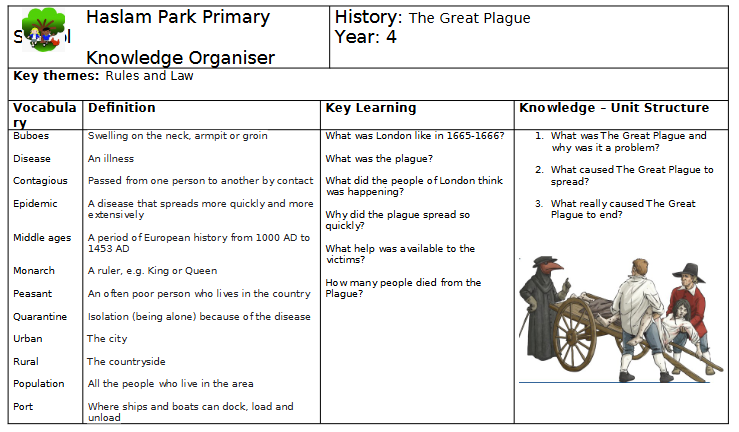
Below is an example of one of our Knowledge Organisers - each unit taught across school has its own Knowledge Organiser to reflect the vocabulary being taught, to show working examples and to prompt discussion in class. Here is a link to the other History Knowledge Organisers: https://haslam.sites.schooljotter2.com/edit/9655347
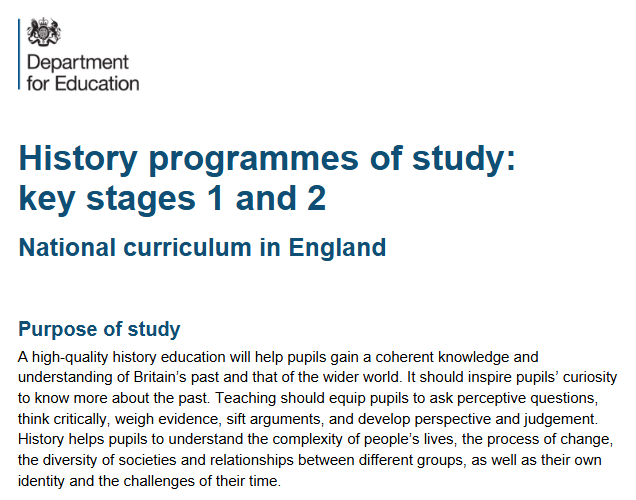
Primary National Curriculum
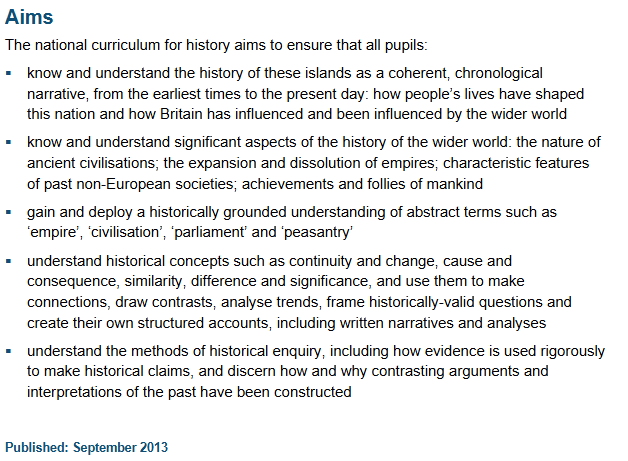
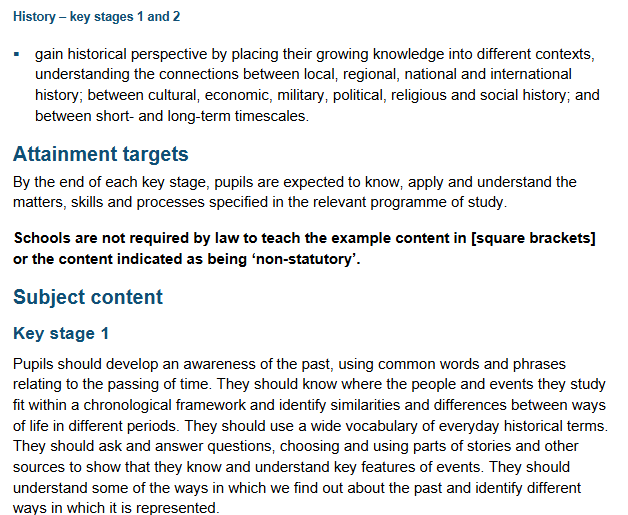
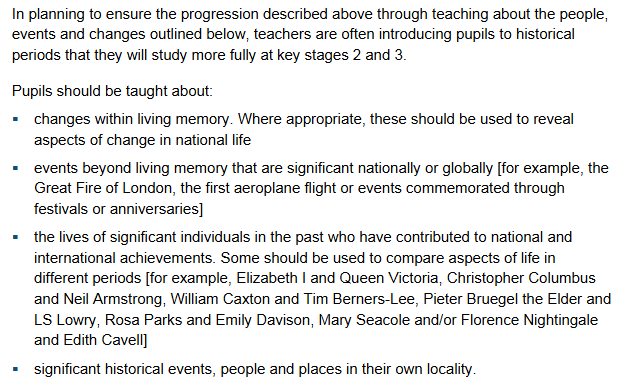
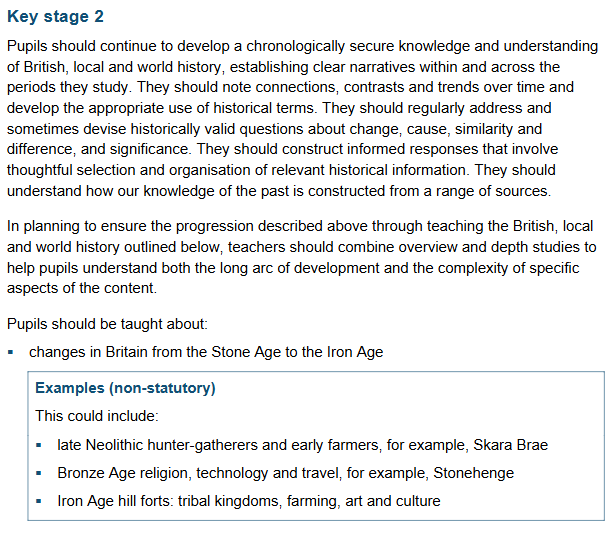
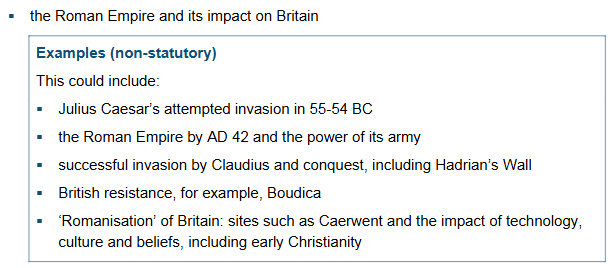
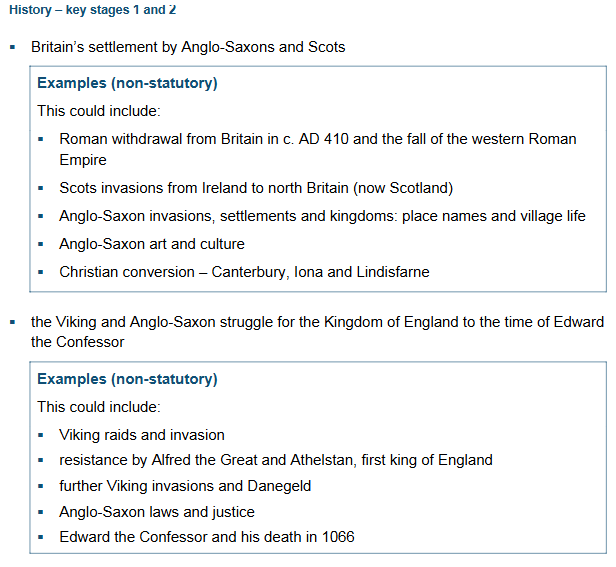
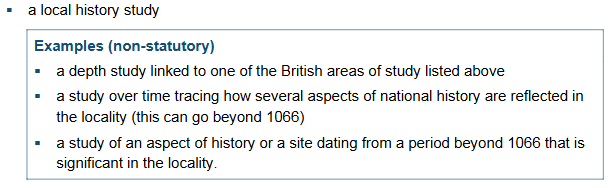
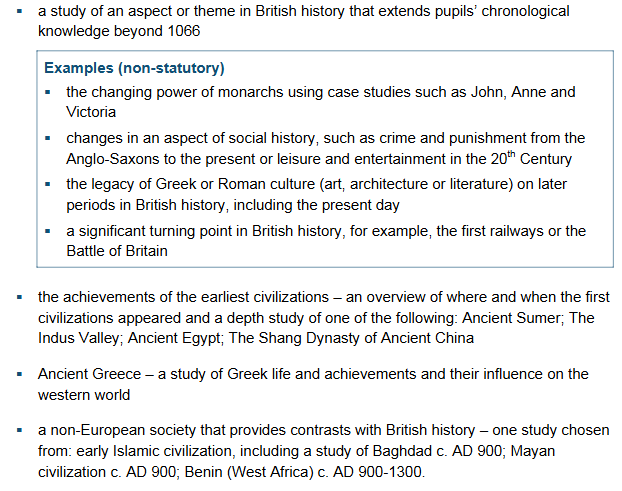
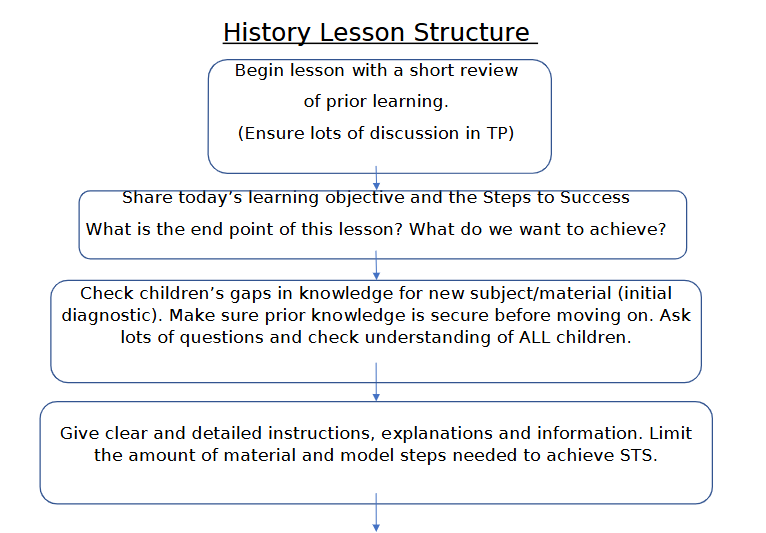
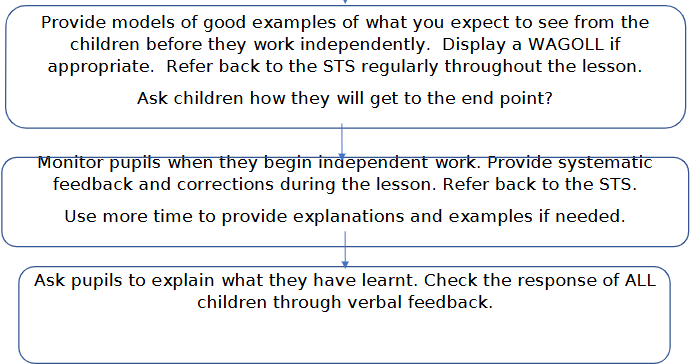
At Haslam park all classes follow the same structure when delivering History lessons, to ensure consistency and allowing for progression. The lesson looks like this...
Women's History Month
March 2022
March is International Women's History Month and to mark such an important month in the calendar, we started off by sharing an assembly all about Women's History Month. Originating in 1978 in California by 5 women in the National Women's History Alliance, it was initially led by Molly Murphy MacGregor, and collectively the alliance identified that women's accomplishments in history were practically invisible, as there was very little information recorded in any history books.
Women's History Month celebrates the contributions of women and girls to events and achievements in history and contemporary society. This week, Haslam Park children engaged in guided reading activities dedicated to some amazing key women in history such as Florence Nightingale, Rosa Parks, Amelia Earhart and Queen Boudicca. Take a look at some of the amazing activities we got up to...


History catch up curriculum day
Friday 18th February 2022
Here at Haslam Park, we care about what our children say and think, and one of the questions that came up during our recent History pupil voice was 'When will we learn about the topics we missed during lockdown?' So, we planned a full day of activities across school, to address the topics the children had missed. Have a look at the learning our children engaged in...

EYFS learnt all about castles

Year 1 learnt about the history of toys and made their own toy

Year 2 enjoyed learning about Grace O' Malley

Year 4 learnt about how Britain changed from the Stone Age to the Iron Age